
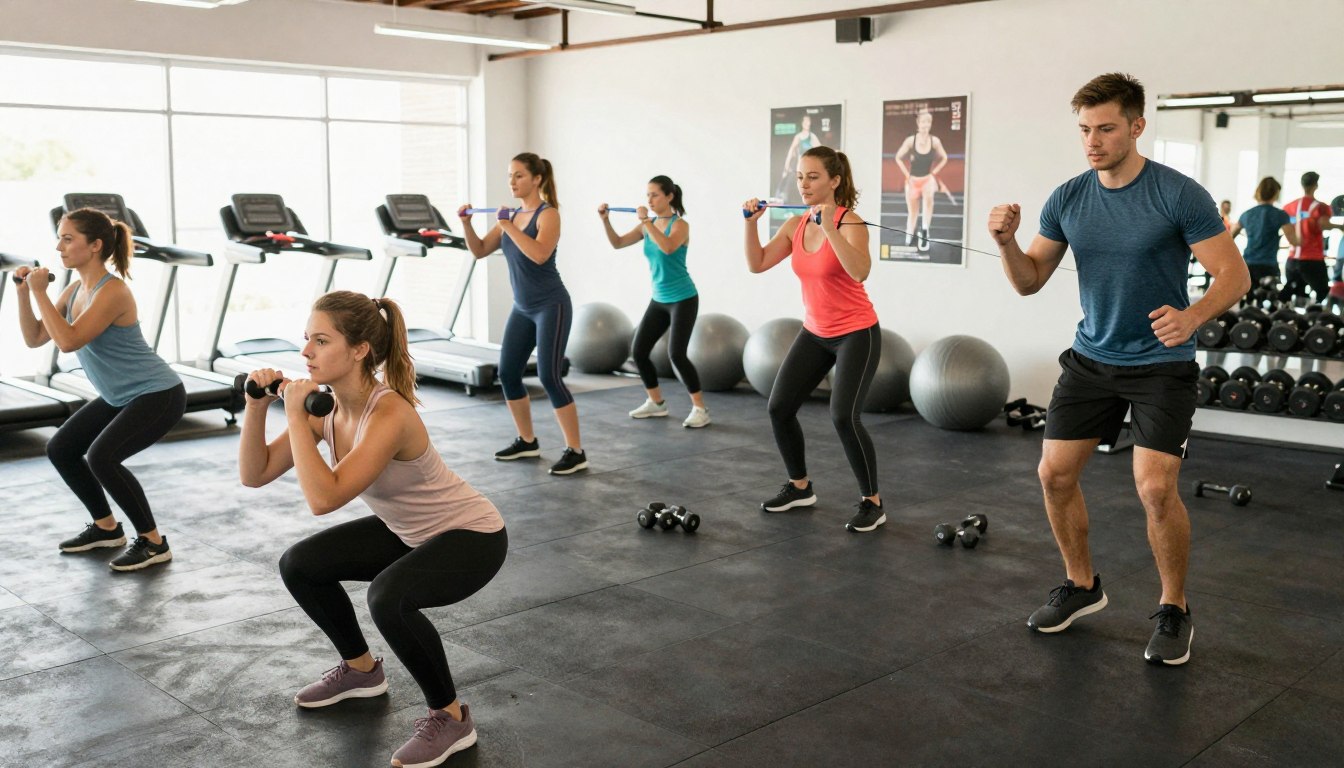
Did you know that nearly 80 percent of adults in the United States miss the mark on weekly movement goals? It is a staggering number showing how many people struggle to find a starting point. This guide aims to change that reality for you.
Embarking on a fitness journey often feels incredibly daunting; however, it should not be. By mixing basic strength and cardio exercises, you build a powerful foundation for health plus boost daily energy. Starting small remains the secret to lasting change.
Most people quit because they try to do too much too soon. Our approach focuses on steady progress over perfection. We will explore how these movements work together to help you feel amazing while reaching goals safely.
Consistency creates results that last a lifetime. You do not need expensive gear to begin this transformation. Just bring your enthusiasm with a willingness to learn the ropes.
Key Takeaways
- Combining movements improves heart health.
- Resistance training builds lean muscle.
- Consistency leads to long-term success.
- Newcomers benefit from simple routines.
- Safety remains a top priority.
- Energy levels increase with regular activity.
Why Beginners Need Both Strength and Cardio Training
Beginners can significantly benefit from a workout routine that includes both strength training and cardio exercises. This combination is not just about burning calories or building muscle; it’s about creating a foundation for long-term health and fitness.
When you incorporate both types of exercises into your routine, you can experience a wide range of benefits. For instance, strength training helps build muscle mass, which can boost your metabolism, while cardio exercises improve heart health and increase endurance.
Health Benefits of Combining Both Exercise Types
Combining strength and cardio training offers numerous health benefits, including:
- Improved Overall Fitness: Enhancing cardiovascular health and muscular strength.
- Weight Management: Burning calories and building muscle to maintain a healthy weight.
- Enhanced Cardiovascular Health: Reducing the risk of heart disease and improving circulation.
- Better Bone Density: Strength training can help prevent osteoporosis.
- Improved Mental Health: Reducing stress and anxiety through exercise.
How Strength and Cardio Work Together for Better Results
Strength and cardio exercises are not mutually exclusive; they complement each other. For example, having stronger muscles from strength training can improve your performance in cardio activities. Conversely, regular cardio exercise can enhance your endurance during strength training sessions.
This synergy means that a balanced routine can lead to better overall results, whether your goal is to lose weight, build muscle, or simply feel healthier and more energetic.
To illustrate, consider a beginner who starts with a routine that includes both squats (strength training) and jogging (cardio). As they get stronger and more endurance-capable, they can progressively challenge themselves with more intense workouts, achieving greater fitness gains.
Preparing for Your First Workout
Before diving into your first workout, taking a few steps to prepare can make a significant difference in your overall experience. This preparation not only ensures you’re physically ready but also mentally prepared for the journey ahead.
Essential Equipment You’ll Need to Get Started
To start, you’ll need some basic equipment. This doesn’t mean you need to invest in a lot of expensive gear, but having the right tools can enhance your workout.
For a simple workout plan, consider the following:
- Comfortable workout clothes
- A good pair of workout shoes
- A water bottle
- A yoga mat (for floor exercises)
Having the right equipment can make your workouts more effective and comfortable.
Setting Realistic Fitness Goals as a Beginner
Setting achievable goals is crucial for maintaining motivation. As a beginner, it’s essential to be realistic about what you can accomplish in a short period.
| Goal Type | Short-Term (Weeks) | Long-Term (Months) |
|---|---|---|
| Strength | Increase by 5 lbs | Increase by 20 lbs |
| Cardio | Run for 10 minutes | Run for 30 minutes |
| Flexibility | Hold stretch for 15 seconds | Hold stretch for 60 seconds |
Setting realistic goals helps in tracking progress and staying motivated.
Important Safety Considerations Before You Begin
Safety should always be your top priority when starting a new workout routine. This includes understanding your physical limits and being aware of any health concerns.
Before you start, consider consulting with a healthcare professional, especially if you have any pre-existing conditions. It’s also crucial to listen to your body and not push yourself too hard, too fast.
Basic Strength and Cardio Exercises to Get Started
Starting your fitness journey requires a solid foundation of basic strength and cardio exercises. These exercises are essential for building overall fitness and preparing your body for more advanced workouts.
Fundamental Strength Exercises for Beginners
Strength training is a crucial component of any fitness routine. It helps build muscle, increase bone density, and enhance overall physical strength.
Bodyweight Squats
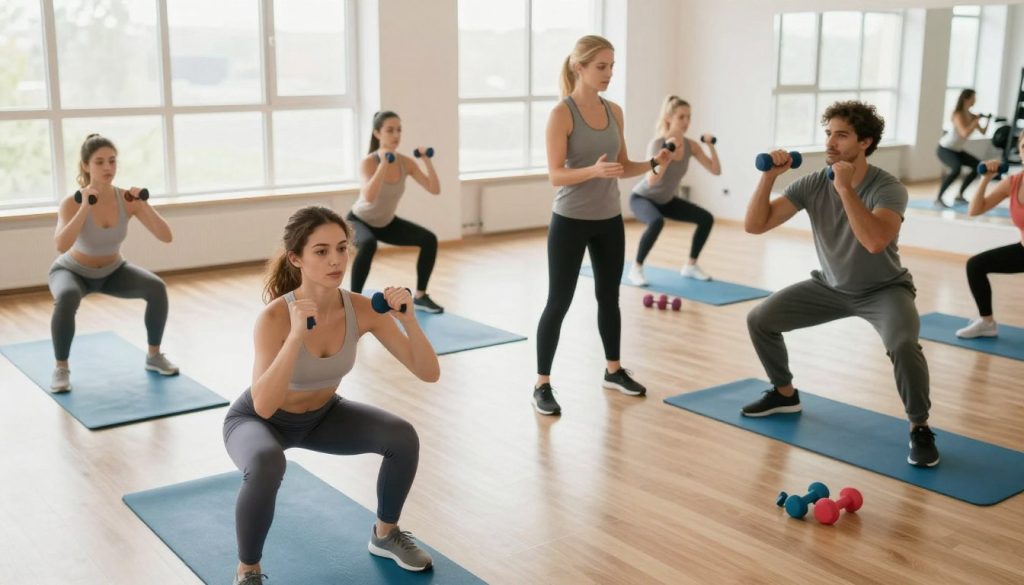
Bodyweight squats are a fundamental exercise that targets the legs and glutes. To perform a squat, stand with your feet shoulder-width apart, then lower your body down until your thighs are parallel to the ground. Keep your back straight and engage your core throughout the movement.
Push-Ups and Modified Variations
Push-ups are a classic upper body exercise that works the chest, shoulders, and triceps. For beginners, modified push-ups on the knees can be a great alternative. Focus on lowering your body until your chest nearly touches the ground.
Planks for Core Strength
Planks are excellent for building core strength and improving posture. To perform a plank, start in a push-up position with your hands shoulder-width apart, and hold your body straight for as long as possible. Engage your core and keep your body in a straight line.
Lunges
Lunges target the legs and glutes, helping to improve balance and coordination. Step out with one foot and lower your body until your back knee almost touches the ground. Alternate legs with each repetition.
Dumbbell Rows
Dumbbell rows are effective for strengthening the back and arms. Hold a dumbbell in each hand, bend your knees slightly, and lean forward at the hips. Pull the dumbbells towards your chest, squeezing your shoulder blades together.
Simple Cardio Exercises Anyone Can Do
Cardio exercises are vital for improving heart health and burning calories. Here are some simple cardio exercises that are perfect for beginners.
Walking and Brisk Walking
Walking is a low-impact exercise that is easy on the joints. Brisk walking can increase the intensity and provide a better cardiovascular workout. Aim for a pace where you’re walking quickly but can still hold a conversation.
Jumping Jacks
Jumping jacks are a full-body cardio exercise that can be done anywhere. They involve jumping with your feet apart while raising your arms above your head. Start with a slow pace and increase your speed as you get comfortable.
Step-Ups Using Stairs
Step-ups are great for targeting the legs and glutes. Using stairs or a sturdy bench, step up with one foot and bring the other foot up to meet it. Alternate legs with each step.
High Knees and Marching in Place
High knees and marching in place are simple cardio exercises that can be done at home. They help improve cardiovascular fitness and warm up the muscles. Run in place, bringing one knee up towards your chest while keeping the other foot on the ground.
| Exercise | Muscle Group | Intensity Level |
|---|---|---|
| Bodyweight Squats | Legs, Glutes | Medium |
| Push-Ups | Chest, Shoulders, Triceps | Medium |
| Planks | Core | Low |
| Jumping Jacks | Full Body | High |
| Walking | Legs, Cardiovascular | Low |
Your First Beginner Strength Workout Routine
Embarking on a strength workout journey can be both exciting and intimidating, but with a well-structured beginner workout routine, you’ll be on the right track. This section will guide you through creating a comprehensive strength training program that’s perfect for beginners.
Proper Warm-Up Protocol
Before diving into any strength workout, it’s crucial to prepare your muscles with a proper warm-up. A good warm-up increases blood flow to your muscles, reducing the risk of injury and improving performance. Here are some simple steps to follow:
- 5-10 minutes of light cardio, such as jogging in place or jumping jacks
- Dynamic stretching, like arm circles and leg swings
- Muscle activation exercises, such as glute bridges and planks
Complete Step-by-Step Strength Workout
For your first strength workout, focus on exercises that work multiple muscle groups at once. This approach is efficient and helps build overall strength. Here’s a simple routine to get you started:
- Squats: 3 sets of 8-12 reps
- Push-ups: 3 sets of 8-12 reps (modify on knees if necessary)
- Lunges: 3 sets of 8-12 reps per leg
- Dumbbell rows: 3 sets of 8-12 reps per arm
- Plank: 3 sets, holding for 30-60 seconds
Cool-Down and Stretching Routine
After your strength workout, it’s essential to cool down and stretch to help your body recover. This process aids in reducing muscle soreness and improving flexibility. Consider the following stretches:
- Hamstring stretch: Stand with your feet shoulder-width apart, then bend forward at the hips
- Chest stretch: Stand in a doorway with your hands on the doorframe at shoulder height
- Quad stretch: Stand with one hand against a wall for balance, bend one knee, and grab your ankle
Hold each stretch for 20-30 seconds and breathe deeply, feeling the relaxation spread through your muscles.
Your First Beginner Cardio Workout Routine
Starting your cardio journey can be both exciting and intimidating, but with a beginner-friendly routine, you’ll be on your way to a healthier lifestyle. Cardio exercises are essential for improving heart health, increasing stamina, and burning calories. As a beginner, it’s crucial to start with manageable and enjoyable routines that keep you motivated.
When designing your first cardio workout, consider activities that you enjoy or have always wanted to try. This could be jogging, cycling, swimming, or even dancing. The key is to select exercises that you can sustain for a period, allowing you to build endurance over time.
Low-Impact Cardio Session for Complete Beginners
For those who are just starting out, low-impact cardio sessions are an excellent way to begin. These exercises are gentle on the joints and can be modified to suit different fitness levels. Examples include brisk walking, light jogging, or using a stationary bike at a leisurely pace.
A simple low-impact cardio routine might involve:
- 5-10 minutes of brisk walking or light jogging
- 5 minutes on a stationary bike or rowing machine
- 3 sets of 30 seconds of jumping jacks followed by 30 seconds of rest
Moderate-Intensity Cardio Options
As you become more comfortable with cardio exercises, you can gradually increase the intensity. Moderate-intensity cardio involves activities that raise your heart rate and cause you to breathe harder, but you’re still able to carry on a conversation.
Some examples of moderate-intensity cardio include:
- Jogging or running at a moderate pace
- Swimming laps at a steady pace
- Dancing at a higher intensity
- Cycling on a stationary bike with resistance
How to Monitor Your Heart Rate and Effort Level
Monitoring your heart rate and effort level is crucial to ensure you’re working out within a safe and effective range. You can check your heart rate by taking your pulse manually or using a heart rate monitor.
To gauge your effort level, use the Perceived Exertion Scale, where:
- 1-3 corresponds to low intensity (you can sing)
- 4-6 is moderate intensity (you can talk but not sing)
- 7-10 is high intensity (you can barely speak)
Aim for a moderate intensity (4-6 on the scale) for most of your cardio workouts.
By understanding and applying these principles, you can create a quick workout routine that suits your fitness level and goals, helping you stay on track and enjoy the process.
Creating Your Weekly Beginner Fitness Schedule
A well-structured beginner fitness program requires a balanced weekly schedule. As you start your fitness journey, it’s essential to plan your workouts effectively to achieve your goals and ensure steady progress.
To create an effective schedule, you need to consider your current fitness level, available workout time, and personal preferences. A balanced schedule should include a mix of strength training and cardio exercises, with adequate rest days for recovery.
Sample 3-Day Per Week Workout Program
For those new to fitness or with limited time, a 3-day per week program is a great starting point. Here’s a sample schedule:
- Monday: Strength training (upper body and core)
- Wednesday: Cardio session (30 minutes of moderate-intensity exercise)
- Friday: Strength training (lower body and core)
This schedule allows for a balance of strength and cardio while giving your muscles time to recover between sessions.
Sample 4-Day Per Week Workout Program
If you have more time to dedicate to your fitness journey, a 4-day per week program can offer more variety and faster progress. Here’s an example:
- Monday: Upper body strength training
- Tuesday: Cardio session (30 minutes of moderate-intensity exercise)
- Thursday: Lower body strength training
- Friday: Cardio session (30 minutes of moderate-intensity exercise)
This schedule increases the frequency of your workouts, allowing for more comprehensive fitness development.
Why Rest Days Are Essential for Progress
Rest days are a crucial component of any beginner fitness program. They allow your muscles to recover and rebuild, making them stronger over time. Without adequate rest, you risk overtraining, which can lead to injury or burnout.
Incorporating rest days into your schedule also helps prevent mental fatigue, keeping you motivated and engaged in your fitness journey. Remember, progress is not just about the workouts you do, but also about how well you recover.
By planning your weekly schedule carefully and including rest days, you’ll be well on your way to creating a sustainable and effective beginner fitness program.
Tips for Staying Consistent and Progressing Safely
As you begin your fitness journey, understanding how to maintain consistency and progress is vital. Staying consistent with your workouts and progressing safely are crucial elements in achieving your fitness goals. A well-planned basic exercise regimen is essential, but it’s equally important to know how to stick to it and make adjustments as needed.
Simple Ways to Track Your Fitness Progress
Tracking your fitness progress is a great motivator and helps you stay on track. There are several simple ways to do this:
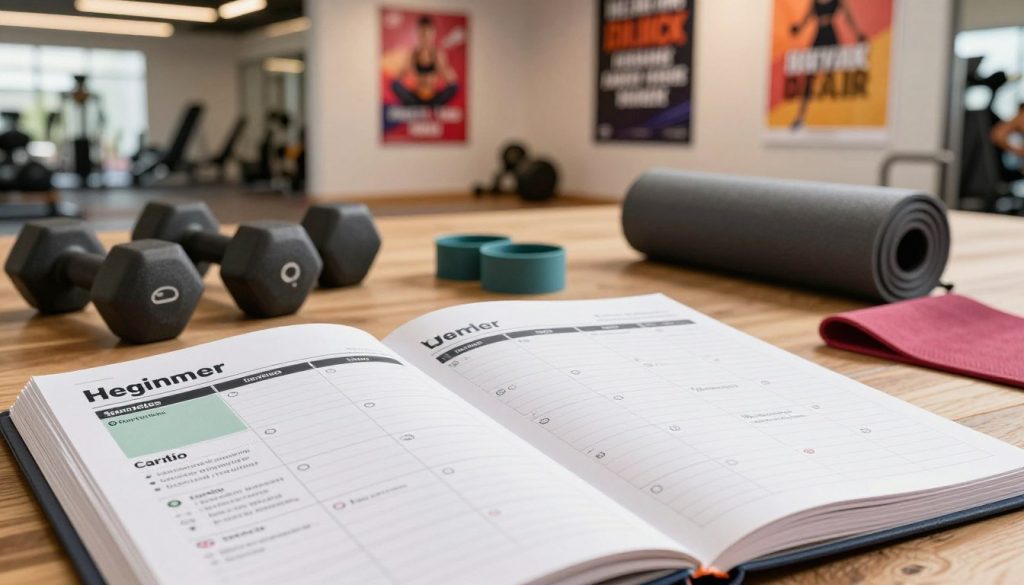
- Keep a workout journal to log your exercises, sets, and reps.
- Use a fitness tracker or mobile app to monitor your daily activity and progress.
- Take progress photos and measurements regularly.
By tracking your progress, you can see how far you’ve come and identify areas that need improvement. This information can also help you make informed decisions about when to increase the intensity of your workouts.
When and How to Increase Workout Intensity
As you get more comfortable with your basic exercise regimen, it’s essential to challenge yourself by increasing the intensity of your workouts. Here are some guidelines to follow:
| Intensity Level | Indicators | Actions |
|---|---|---|
| Low | Feeling too easy, not sweating much | Increase weight, reps, or sets |
| Moderate | Feeling challenged but manageable | Maintain current intensity, focus on proper form |
| High | Feeling very challenged, sweating profusely | Reduce weight or reps if necessary, focus on recovery |
Common Beginner Mistakes to Avoid
As a beginner, it’s easy to make mistakes that can hinder your progress or even lead to injury. Here are some common mistakes to avoid:
- Not warming up properly before a workout.
- Using poor form or technique when performing exercises.
- Not listening to your body and ignoring signs of fatigue or pain.
By being aware of these common mistakes, you can take steps to avoid them and ensure a safe and effective workout routine.
Strategies for Staying Motivated Long-Term
Staying motivated is crucial for long-term success in your fitness journey. Here are some strategies to help you stay motivated:
- Set realistic and achievable goals.
- Find a workout buddy or join a fitness community.
- Reward yourself for reaching milestones.
By incorporating these strategies into your fitness routine, you can maintain your motivation and continue making progress towards your goals.
Conclusion
Embarking on a fitness journey can be intimidating, but with a solid foundation in basic strength and cardio exercises, beginners can set themselves up for success. By understanding the importance of combining both types of training, individuals can unlock a wealth of health benefits and achieve their fitness goals.
Starting with simple exercises and gradually increasing intensity is key to progressing safely and effectively. By incorporating basic strength and cardio exercises into a weekly routine, individuals can improve their overall health and fitness.
As you begin your fitness journey, remember to stay consistent, track your progress, and celebrate your achievements. With persistence and dedication, you can achieve a stronger, healthier you.