
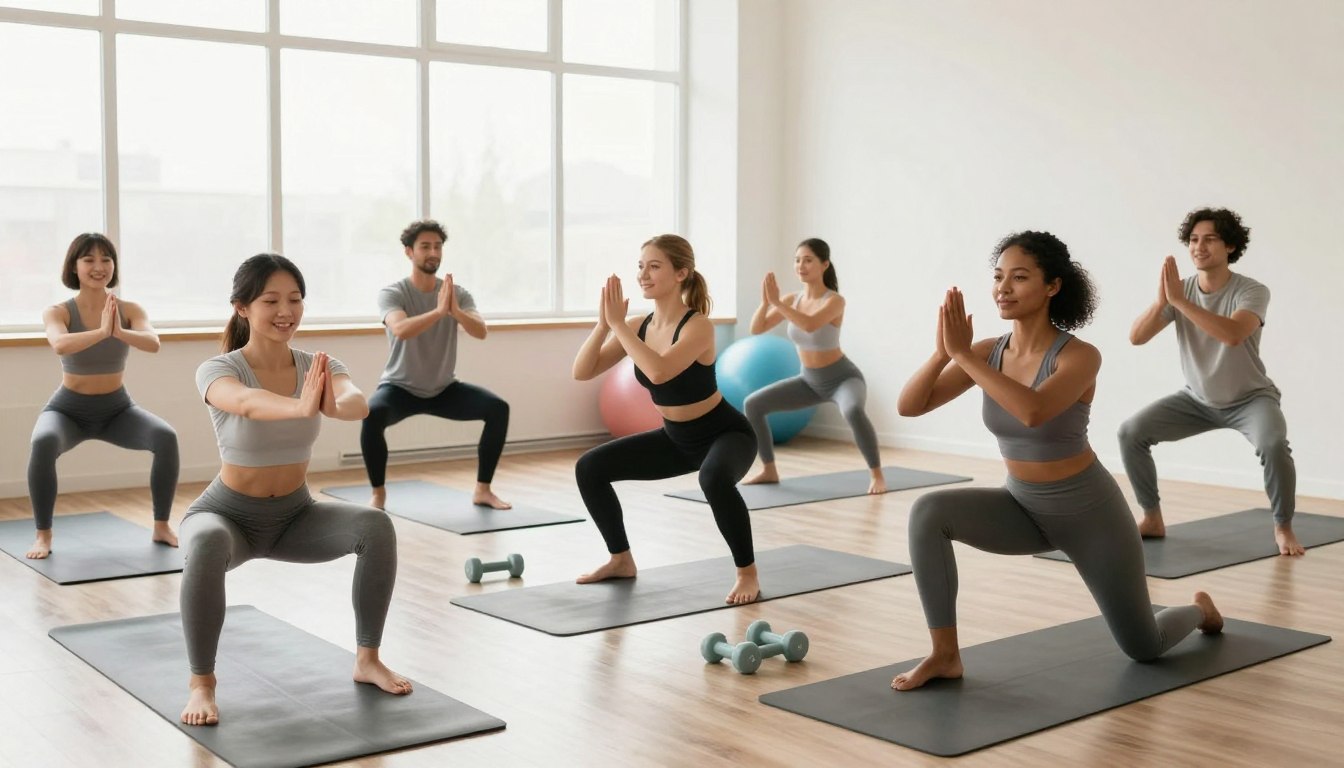
Did you know that just fifteen minutes of daily physical activity can increase your life expectancy by three whole years? Many people feel overwhelmed by the prospect of intense gym sessions, but consistency matters much more than intensity. Taking small steps consistently leads to significant results over time.
Beginning a new routine does not have to be painful or exhausting for your body. Finding easy exercises for beginners allows you to develop personal confidence without the risk of burning out. You can improve your health while simply moving around your living room or walking through a local park.
This journey is about celebrating what your body can do right now rather than punishing it for being out of shape. By choosing movements that feel good, you create a sustainable habit that lasts for decades. These easy exercises for beginners are designed to fit into any busy schedule without requiring special equipment.
Let’s explore how you can jumpstart your health today with minimal stress and maximum enjoyment. You do not need a pricey gym membership to see real changes in how you feel. Success starts with the very first step you take this afternoon.
Key Takeaways
- Short daily sessions significantly boost your long-term longevity.
- Starting with low-impact movements prevents early physical burnout.
- Consistency serves as the primary driver of your physical progress.
- No expensive equipment is necessary to begin moving today.
- Small wins build the mental habit of regular physical activity.
- Listening to your body ensures a safer and more enjoyable experience.
Why Starting with Simple Fitness Routines Makes All the Difference
Embracing basic workout routines from the outset can significantly impact your overall fitness journey. Simple fitness routines lay the groundwork for a sustainable and enjoyable path to health and wellness. By starting with manageable exercises, individuals can set themselves up for long-term success.
Building Long-Term Exercise Habits
Building long-term exercise habits is crucial for sustained health benefits. Simple routines help create a consistent exercise habit, making it easier to stick to a workout plan. According to a study published in the Journal of Sports Sciences, consistency is key to developing long-term exercise adherence.
Consistency in exercise not only improves physical health but also enhances mental well-being. By incorporating simple fitness routines into your daily schedule, you can make exercise a habitual part of your lifestyle.
Reducing Risk of Injury as a Beginner
Reducing the risk of injury is a significant advantage of starting with simple fitness routines. Beginners can avoid burnout and physical strain by gradually increasing exercise intensity. As noted by the American Council on Exercise (ACE), proper progression is vital to preventing injuries.
| Exercise Type | Beginner-Friendly | Injury Risk |
|---|---|---|
| Simple Cardio | Yes | Low |
| Basic Strength Training | Yes | Moderate |
| High-Intensity Interval Training (HIIT) | No | High |
Boosting Confidence Through Achievable Goals
Boosting confidence through achievable goals is another benefit of simple fitness routines. By setting and achieving small goals, individuals can build motivation and reinforce positive exercise habits.
“You can’t motivate yourself if you’re not motivated; you can’t inspire yourself if you’re not inspired.” – Jane Fonda
Celebrating small victories along your fitness journey can significantly enhance your motivation to continue. Simple fitness routines provide a foundation upon which confidence and motivation can grow.
Easy Exercises for Beginners: Your Essential Starting Toolkit
Embarking on a fitness journey can be as simple as incorporating a few straightforward exercises into your daily routine. These exercises are designed to be beginner-friendly, requiring minimal equipment and setup. By starting with simple activities, you can build a strong foundation for more advanced workouts later on.
Walking: The Most Accessible Cardio Exercise
Walking is an excellent way to begin your fitness journey. It’s low-impact, easy to do, and requires no special equipment other than a good pair of shoes. Walking is accessible to almost everyone, making it an ideal starting point.
How to Structure Your First Walking Sessions
Begin with short walks of about 10 to 15 minutes a day. You can start in your neighborhood or on a local treadmill. The key is to establish a routine that you can stick to. As you get more comfortable, you can gradually increase the duration and frequency of your walks.
Gradually Increasing Duration and Pace
As you become more accustomed to walking, try to increase your walking time by 5 to 10 minutes each week. You can also challenge yourself by incorporating short bursts of faster walking or walking uphill. This progression will help improve your cardiovascular health and endurance.
Chair Squats for Building Leg Strength
Chair squats are a great exercise for strengthening your legs without putting excessive strain on your joints. They are particularly beneficial for beginners who may struggle with traditional squats.
Step-by-Step Form Guide
To perform a chair squat, stand in front of a sturdy chair with your feet shoulder-width apart. Slowly lower yourself into the chair, keeping your back straight and your knees behind your toes. Stand up and repeat. Focus on controlled movements to maximize the effectiveness of the exercise.
Wall Push-Ups for Upper Body Development
Wall push-ups are a modified version of traditional push-ups that are easier on the joints. They are an excellent way to build upper body strength, particularly in the chest, shoulders, and triceps.
Proper Hand Placement and Movement
Stand with your feet shoulder-width apart and your hands on the wall at shoulder height. Slowly lower your body toward the wall, keeping your elbows slightly bent, and then push back to the starting position. Maintain a straight line from head to heels throughout the exercise.
Standing Marches in Place
Standing marches are a simple yet effective exercise for improving cardiovascular fitness and strengthening the legs. They can be done almost anywhere and require no equipment.
To perform standing marches, stand with your feet together and lift your knees high, as if marching in place. You can add variety by incorporating arm movements or increasing the pace. This exercise is a great way to get your heart rate up and warm up your muscles.
Low-Impact Workouts Perfect for Beginners
Low-impact workouts are perfect for beginners, offering a variety of exercises that are easy on the joints and promote overall well-being. These exercises are designed to be gentle, yet effective, making them an ideal starting point for those new to fitness or looking for a low-stress way to stay active.
One of the key benefits of low-impact workouts is their ability to reduce the risk of injury, which is a common concern for beginners. By choosing exercises that are low-impact, individuals can improve their cardiovascular health, build strength, and increase flexibility without putting excessive strain on their bodies.
Swimming and Water-Based Activities
Swimming is an excellent low-impact exercise that works multiple muscle groups without putting excessive strain on the joints. It’s also a great cardiovascular workout, improving heart health and burning calories. Water-based activities like aqua jogging, water aerobics, or simply swimming laps are excellent options for those looking for a fun and engaging way to stay fit.
Benefits of Swimming:
- Improves cardiovascular health
- Builds endurance and strength
- Low-impact, reducing the risk of injury
- Can be adapted to different fitness levels
Stationary Cycling or Recumbent Biking
Stationary cycling, whether on a traditional stationary bike or a recumbent bike, is another low-impact exercise that is easy on the joints. It’s an effective way to improve cardiovascular fitness and build leg strength. Many gyms offer cycling classes, or you can cycle at home with a stationary bike.
Tips for Stationary Cycling:
- Start with a gentle pace and gradually increase intensity
- Adjust the resistance to challenge yourself
- Consider incorporating interval training for variety
Elliptical Training for Joint-Friendly Cardio
Elliptical trainers provide a low-impact, cardiovascular workout that simulates running without the high-impact stress on the joints. They’re great for improving cardiovascular health and can be adjusted to different intensity levels.
Elliptical training is particularly beneficial for those who want to improve their cardiovascular fitness without the risk of high-impact injuries.
Beginner Yoga and Gentle Stretching Classes
Yoga and gentle stretching classes are perfect for improving flexibility, balance, and strength. They are low-impact and can be modified to suit different fitness levels. Many yoga classes are designed specifically for beginners, focusing on basic poses and breathing techniques.
Benefits of Yoga for Beginners:
- Improves flexibility and balance
- Reduces stress and promotes relaxation
- Can be adapted to different fitness levels
- Enhances overall well-being
Building Your First Basic Workout Routine
A well-structured workout routine is the foundation of a successful fitness journey, and it’s easier to create than you think. By starting with simple and achievable exercises, you can build a habit that will help you progress towards your fitness goals.
The 20-Minute Beginner-Friendly Workout Plan
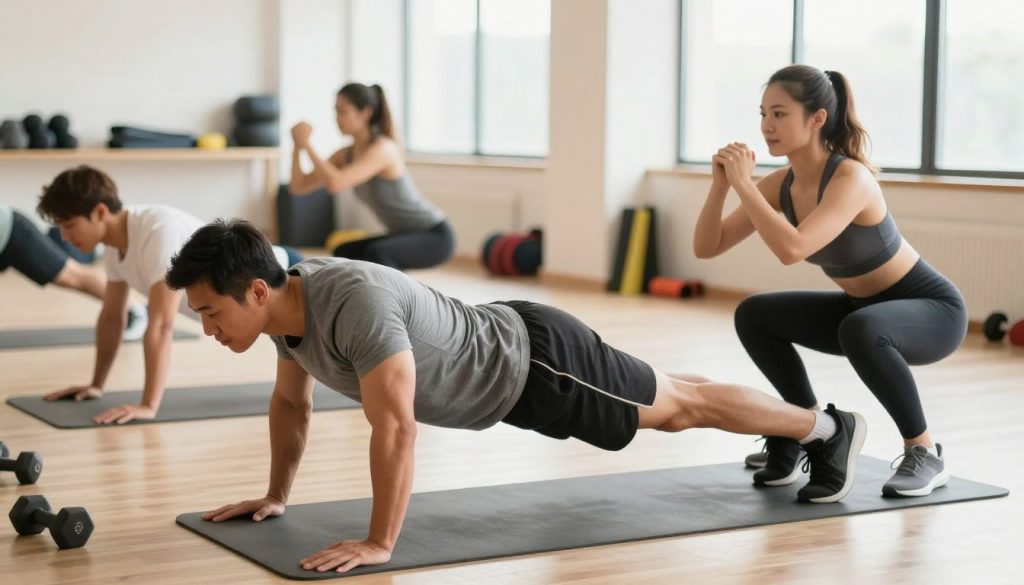
A 20-minute workout plan is an excellent way to start, as it’s short, manageable, and can be done almost anywhere. Here’s a breakdown of how to structure your 20-minute routine:
Warm-Up Activities
Begin with 5 minutes of light cardio and dynamic stretching to prepare your muscles for the workout. Examples include:
- Marching in place
- Leg swings
- Arm circles
Main Exercise Sequence
Spend 10 minutes on the main exercises. For beginners, bodyweight exercises are ideal. Try:
- Chair squats
- Wall push-ups
- Standing leg lifts
Cool-Down Stretches
Finish with 5 minutes of static stretches to help your body recover. Focus on the muscles you used during the main exercises.
How Often Should You Exercise
For beginners, it’s recommended to start with 2-3 times per week and gradually increase the frequency as your body adapts. Consistency is key to seeing progress and avoiding burnout.
| Week | Workout Frequency |
|---|---|
| 1-2 | 2 times per week |
| 3-4 | 3 times per week |
Tracking Your Progress and Staying Motivated
Keeping track of your workouts and progress can be a great motivator. Consider using a fitness journal or mobile app to log your exercises and note how you feel after each session.
Tips for Staying Motivated:
- Set achievable goals
- Find a workout buddy
- Reward yourself for milestones achieved
Straightforward Bodyweight Strength Exercises
As you begin your fitness journey, incorporating straightforward bodyweight strength exercises can significantly enhance your overall strength and endurance. These exercises are not only easy to learn but also require minimal to no equipment, making them perfect for beginners.
Modified Planks for Core Stability
Modified planks are an excellent starting point for building core strength. They help stabilize your body and improve your overall posture.
Knee Plank Position
To perform a knee plank, start by getting into a plank position but instead of supporting your weight on your toes, place your knees on the ground. This modification reduces the intensity while still engaging your core muscles.
Wall Plank Alternative
For an even easier alternative, try a wall plank. Stand with your feet shoulder-width apart and your hands on a wall at shoulder height. Lean forward slightly, engaging your core to maintain a straight line from head to heels.
Glute Bridges for Lower Body
Glute bridges are a simple yet effective exercise for strengthening your lower body. Lie on your back with your knees bent and feet flat on the ground, then lift your hips towards the ceiling, squeezing your glutes at the top.
Standing Leg Lifts and Balancing Exercises
Standing leg lifts are great for improving balance and strengthening your legs. Stand on one leg, lifting the other leg off the ground, and hold for a few seconds before switching legs.
Seated or Standing Arm Raises
Arm raises can be done either seated or standing and are excellent for toning your shoulders and improving overall upper body strength. Simply raise your arms to the sides or front until they are at shoulder height, then lower them back down.
These bodyweight exercises are easy to incorporate into your daily routine and can be modified to suit your fitness level, making them ideal beginner-friendly exercises.
Gentle Exercise Ideas for Flexibility and Mobility
As you begin your fitness journey, incorporating gentle exercises can significantly improve your overall flexibility and mobility. Gentle exercise ideas are essential for enhancing your range of motion, reducing stiffness, and preparing your body for more intense workouts.
Morning Stretching Routine for Beginners
Starting your day with a gentle morning stretching routine can be incredibly beneficial. It helps increase blood flow, reduces morning stiffness, and sets a positive tone for the day. Simple stretches like neck tilts, shoulder rolls, and leg swings can be very effective.
Evening Wind-Down Stretches
In the evening, gentle stretches can help your body relax and prepare for a good night’s sleep. Focus on stretches that release tension in your muscles, such as hamstring stretches, hip flexor stretches, and gentle back stretches.
Neck, Shoulder, and Back Tension Relief
Many people experience tension in their neck, shoulder, and back. Gentle exercises like shoulder blade squeezes, chest stretches, and cat-cow stretches can provide relief and improve flexibility in these areas.
Hip and Hamstring Flexibility Work
Improving flexibility in your hips and hamstrings is crucial for maintaining a healthy range of motion. Gentle exercises such as lunges, leg swings, and seated forward bends can be very effective.
To enhance flexibility and mobility, it’s essential to be consistent with your gentle exercise routine.
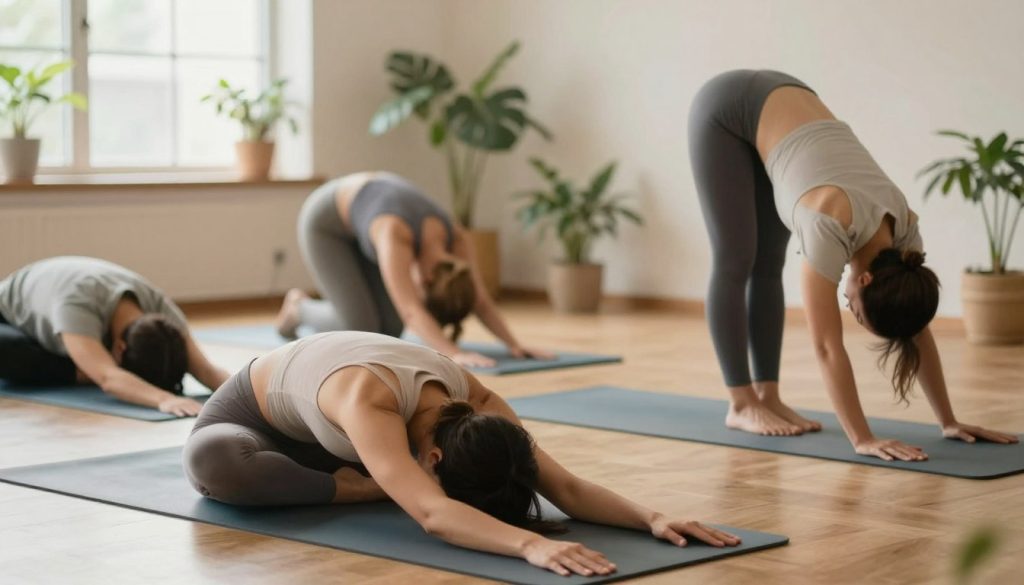
Incorporating a mix of morning and evening stretches, along with specific exercises for tension relief and flexibility, will yield the best results. Remember, the key is to start gently and gradually increase the intensity and duration of your exercises.
Entry-Level Workout Safety and Common Mistakes
As you start your fitness journey with entry-level workout plans, it’s crucial to prioritize safety to avoid injuries and ensure a long-term commitment to your health. Understanding the basics of workout safety can make a significant difference in your overall experience and success.
Always Start with a Proper Warm-Up
A proper warm-up is essential before diving into any exercise routine. It prepares your muscles for the upcoming activity, increases blood flow, and reduces the risk of injury. A good warm-up can be as simple as 5-10 minutes of light cardio, such as jogging in place or jumping jacks, followed by dynamic stretches that target the major muscle groups you’ll be using.
Dynamic stretches like leg swings, arm circles, and hip rotations are effective because they mimic the movements you’ll be doing during your workout, helping to prevent muscle strains and improve flexibility.
Recognizing the Difference Between Discomfort and Pain
It’s normal to feel some level of discomfort when starting a new exercise, especially if you’re pushing yourself beyond your current fitness level. However, there’s a fine line between discomfort and pain. Discomfort is typically a feeling of fatigue or burning in the muscles, which is a normal response to exercise. Pain, on the other hand, is a sharper, more intense sensation that can indicate an injury.
Listening to your body and understanding this difference is crucial. If you experience pain, stop the exercise immediately and rest. It’s better to err on the side of caution and consult with a fitness professional or healthcare provider if you’re unsure.
Avoiding the Too-Much-Too-Soon Trap
One of the most common mistakes beginners make is doing too much too soon. This can lead to burnout, injury, or discouragement. It’s essential to progress gradually, allowing your body time to adapt to the new demands you’re placing on it.
Start with shorter, less intense workouts and gradually increase the duration and intensity as your fitness level improves. This approach not only reduces the risk of overtraining but also helps in building sustainable exercise habits.
When to Seek Medical Clearance Before Exercising
For most people, starting an entry-level workout plan is safe without needing medical clearance. However, certain individuals should consult their healthcare provider before beginning any new exercise program. This includes people with chronic health conditions, such as heart disease, diabetes, or those with significant risk factors for these conditions.
Additionally, if you have any concerns about your health or have been sedentary for a long time, it’s a good idea to get a check-up before starting your fitness journey. Your healthcare provider can offer personalized advice and clearance, ensuring you’re ready to start exercising safely.
Conclusion
Embarking on a fitness journey can be intimidating, but with simple fitness routines, anyone can get started. The key is to begin with exercises that are easy to follow and gradually build up to more challenging workouts.
By incorporating walking, chair squats, wall push-ups, and other beginner-friendly exercises into your daily routine, you’ll be well on your way to developing a sustainable fitness habit. Remember, the goal is to make progress, not perfection.
As you’ve learned, low-impact workouts like swimming, stationary cycling, and elliptical training are perfect for those new to exercise. Pair these with straightforward bodyweight strength exercises and gentle stretches for flexibility and mobility.
Starting your fitness journey is just the first step; staying motivated and tracking your progress is crucial. With the right mindset and simple fitness routines, you’ll be achieving your health and wellness goals in no time.